
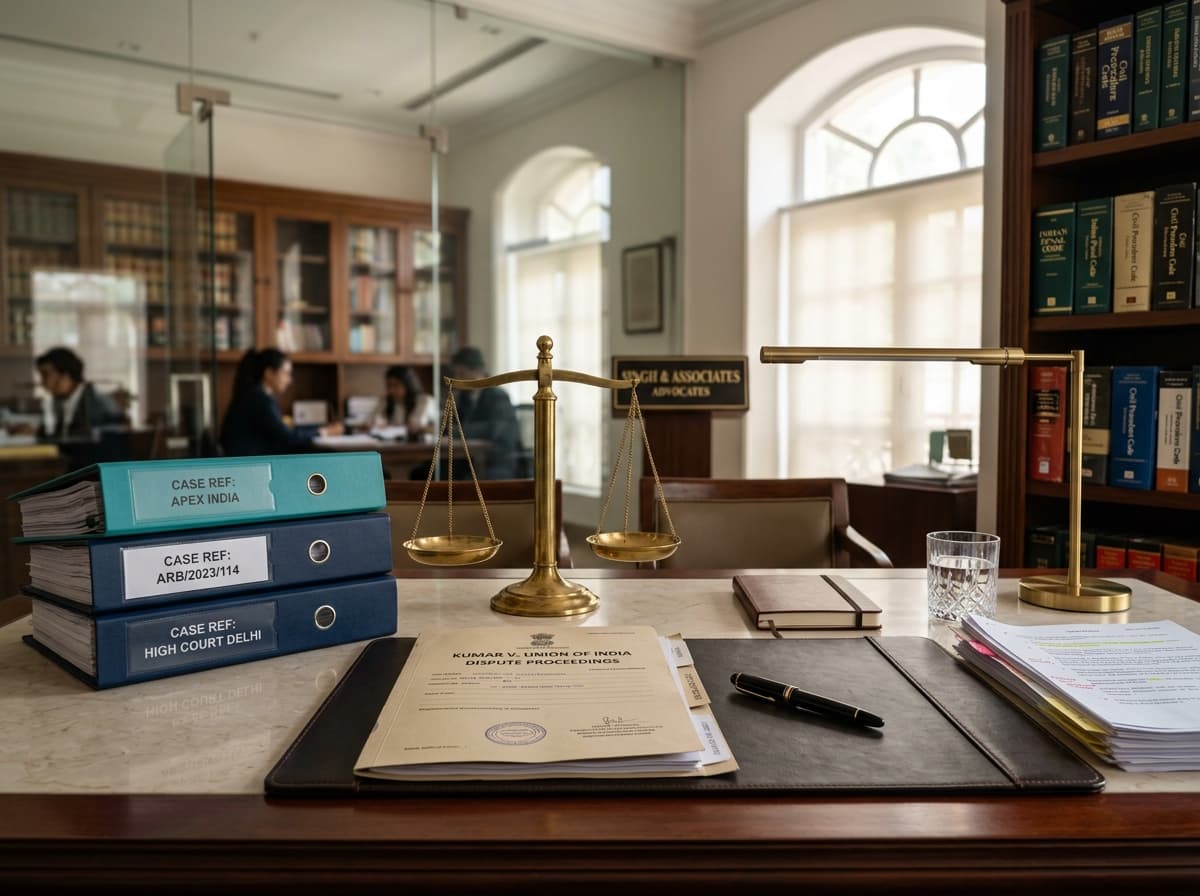
Let's Start With a Question
- “What happens next?”
- “But is sending one always necessary?”
The issue remains unresolved. For many people, this is the point where they begin considering a legal notice.
What People Often Think a Legal Notice Does
Many assume a legal notice:
None of these assumptions are entirely accurate.
Structured, documented, formal communication.
Then Why Send One?
Because clarity matters. A legal notice creates a written record that:
In many disputes, these elements become extremely valuable later.
Think Beyond the Notice Itself
The real value isn't the document. The real value is the record it creates. Months later, when facts are being discussed, documented communication often becomes far more useful than memory.
Situations Where Notices Are Commonly Used
In each case, documentation helps provide structure.
Final Thoughts
The purpose of a legal notice isn't necessarily to create conflict. Often, its purpose is to create clarity. And clarity is frequently the first step toward resolution.